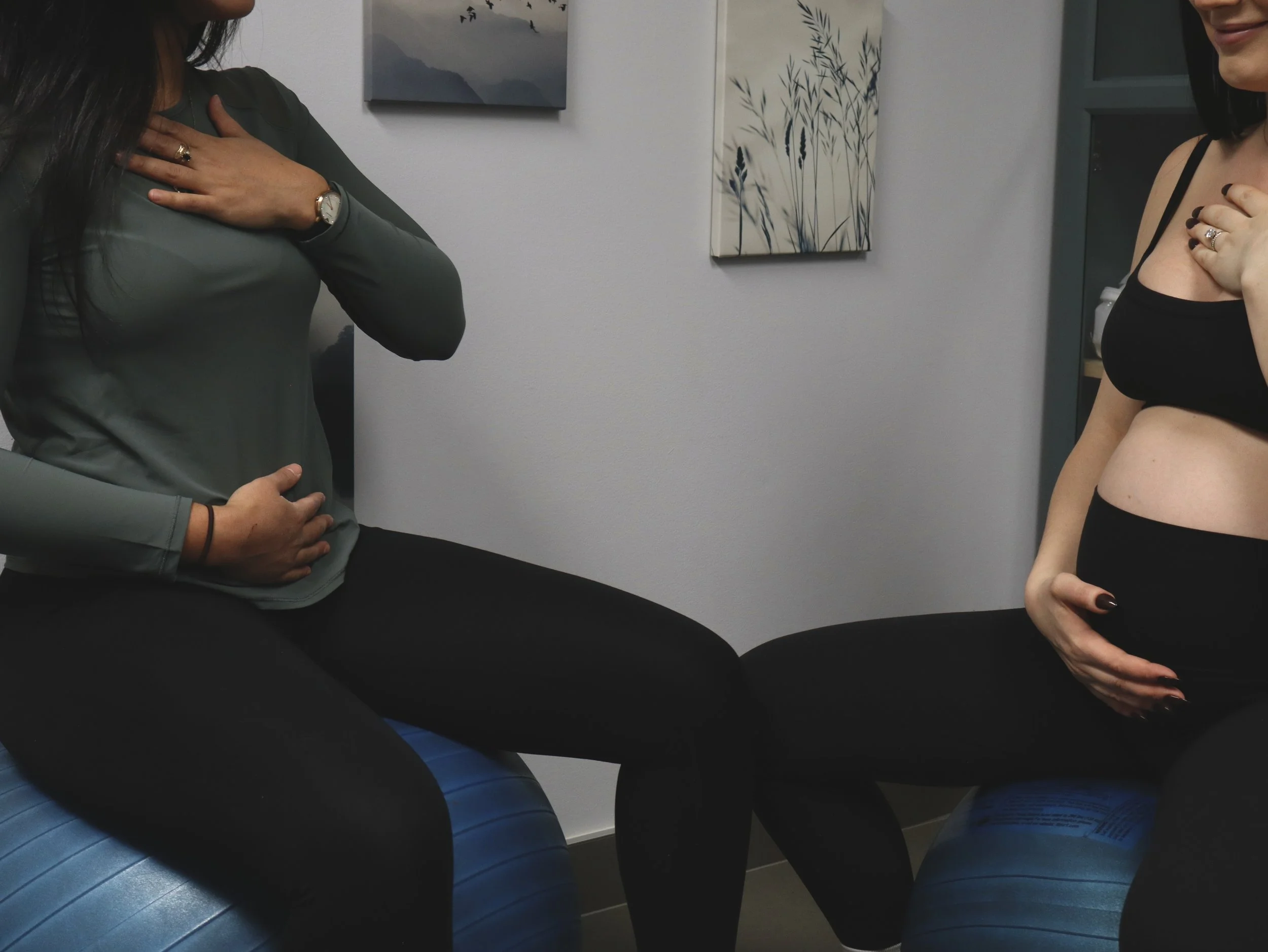
Pregnancy +
Postpartum Care
Pelvic Floor for Pregnancy
Pregnancy is a major transition for a person, both physically as well as mentally. To achieve the best possible outcomes, having a team on your side can make a big difference--don’t discount the value of having a Pelvic Floor Physio by your side through each stage of the journey.
In my practice, I break down the focus of care during Pregnancy into 3 stages. At any point, if pain, discomfort or injury are a concern, physiotherapy is an excellent tool to seek guidance and relief. Common sites of pain include: pubic symphysis/pelvic girdle pain, sciatic/pain down the leg, pressure or heaviness downward, swelling of the legs and feet, or back aches and pain.
Initial Prenatal Assessment – weeks 12-21
During this time, our focus is on:
Identifying specific goals
Education to understand and empower yourself on the pelvic floor anatomy and function
Teaching safe movement strategies for pregnancy
Guide prenatal physical activity, including pelvic floor exercises
Addressing and/or treating any aches and pains
Prenatal Care – weeks 22-32
These appointments are to ensure continued understanding and addressing any other symptoms that may arise as you move through your pregnancy journey. We will:
Review your pelvic floor exercises
Assess the assess pelvic floor muscle tension and strength through an internal exam
Personalized home exercise program (or a referral to an onsite exercise specialist)
Manual therapy or strategies to address or treat any aches and pains.
Preparing for Birth – weeks 32-40
These appointments are geared primarily towards preparing the body for labour and delivery, and ensuring you’re feeling empowered and ready with the right tools at your disposal:
Practicing pelvic floor relaxations/breathing and pushing techniques
Teaching/practicing positions for labour and delivery
Manual therapy (hands on treatment) for abdominal wall, ribcage, and pelvis
Discuss early post-partum health.
Pregnancy can be a time of great change, and often times quite rapidly! The good news is, your life does not need to change in a drastic way. There are resources, supports, and treatments to help manage pain and discomfort, and prepare for feeling more empowered and encouraged about their birthing experience.
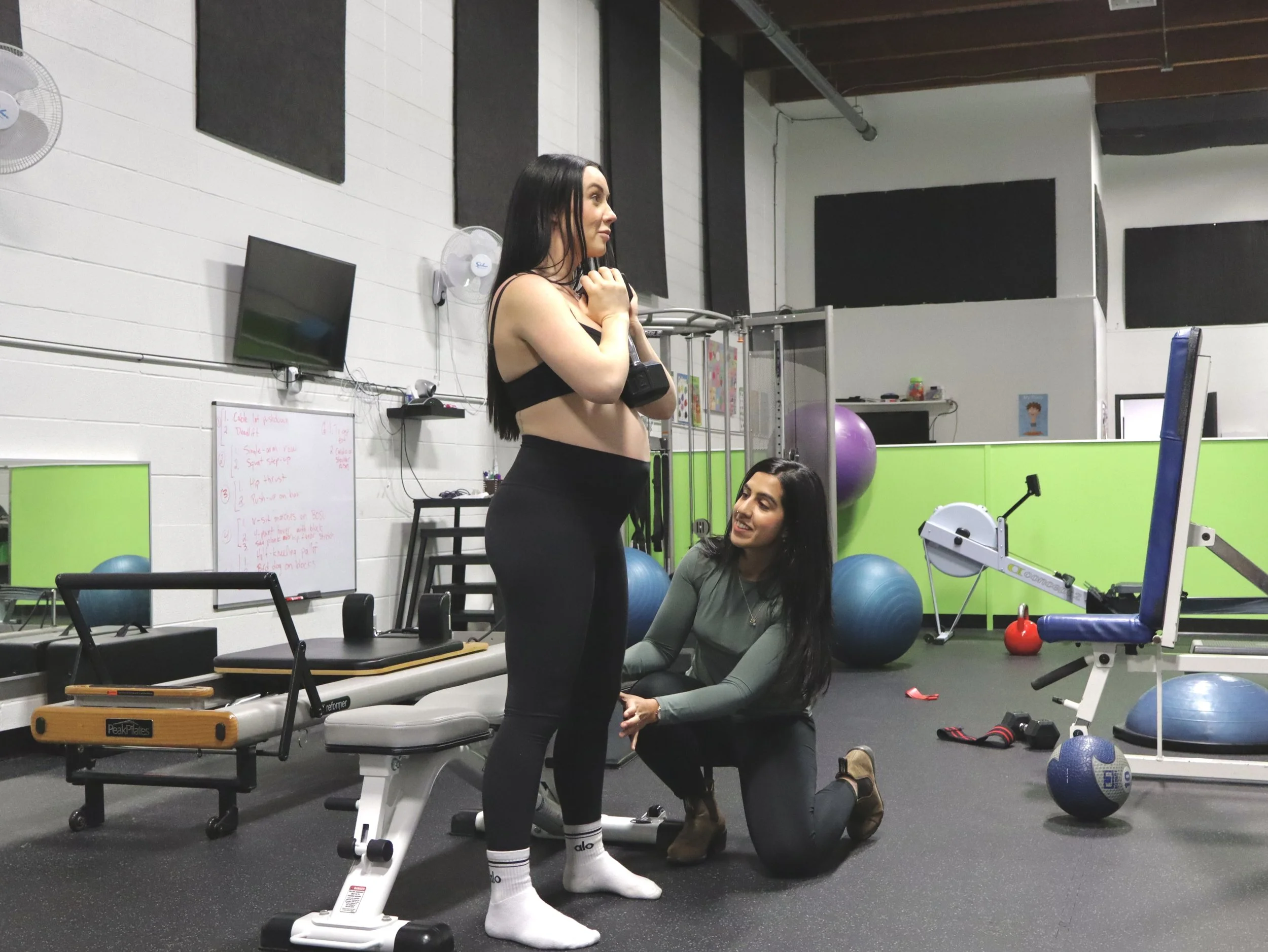
Pelvic Floor Post Partum
After delivery, your body will naturally start to revert to a state similar to that prior to pregnancy. However, many things are no longer the same, and this time line is often longer than most anticipate. In some cases, such as prolonged time in the second state of delivery, or instrumentation use during delivery (such as forceps), trauma to the tissue of the pelvic floor could have some longer lasting consequences. Regardless, having some additional support during this time can improve quality of life and help you get back to feeling healthier and stronger in no time!
Post partum concerns can extend to a few years following delivery. And while the best time to get started is usually* at the 6-8 week mark after delivery (and after your 6-week check up with your doctor or midwife), this includes:
Reassessing movement, abdominal wall (diastatis recti) and pelvic floor integrity
Addressing and treating any musculoskeletal symptoms
Beginning gentle post-partum exercise
After approximately* the 12 week mark, can begin to increase the intensity of some of the therapy. This can include:
Setting goals for return to sport/activity
Prescribing individual home exercise program
Reassessing pelvic floor strength progression
Scar mobilization (perineum or c-section) – if applicable
Managing aches and pains associated with new motherhood (sore thumbs, upper back, feeling “not quite put together” etc.)
*Every body is unique and sometimes your body might just need a bit more time before checking in with your physio!