There are two camps of people out there.
People who swear by naps, and people who cannot do them.
I grew up with Saturday morning chores, where our little family of four would come together to tidy, clean and scrub our home. We did it because we had to, but there were always subtle promises that following a good job, we could go and do something fun afterwards.
Hard at work, we mostly finished by noon, but come 2pm and my dad seems to have other plans then enjoying the day out. He would grab the throw blanket off the couch, find a comfy pillow, and nuzzle in for some afternoon Zzzzz…
In those days, 9 year old Isha promised herself she would never be so lazy to waste away a precious Saturday afternoon.
Little did she know…
This week’s blog is about the science behind napping—I hope you enjoy!
I think I’ve always envied the lifestyle of those in warmer countries who practice afternoon siestas. It’s likely a necessary practice where by mid-day, the hot weather becomes so unbearable that there’s not much else one can do than take a snooze.
Up here in the cooler climates, I actually feel pretty guilty for indulging in naps. Usually the mid-day and afternoon are the best times to enjoy semi-warm weather. This week in fact, we’ve had many days of above seasonal temperatures—basically T-shirt weather in February! I’d be damned if I chose a day on the couch over an run around the block.
(Just kidding, today I slept on my couch instead of taking advantage of 9 degrees C weather #oops #nobodysperfect!)
Depending on who you ask, people will have different opinions on napping. Whether it’s a sign of laziness, or helps improve alertness, each person might have their own relationship to the habit.
The science is really varied, and dependent on a few factors.
Firstly, if you’re one of the lucky ones who manages to get 7 to 9 hours of restful sleep each night, you might find you don’t really need to nap. Ideally when you wake up each morning, you should feel fairly wakeful and ready to take on your day. I realize this isn’t always the case, and there could be a number of factors as to why you’re having trouble falling asleep and staying asleep, but that’s a blog topic for another day.
One of the ways we tend to map a well rested night is by the presence of longer periods of REM (rapid eye movement)1. Before then, there are several stages of non-REM sleep. As the mind drifts off, the brain starts to producing alpha and theta waves, and is characterized by a period where the muscles start to relax and you find yourself “falling” asleep. As we start to move deeper into the sleep states, the body starts to cool down, and this is where we get periods of memory consolidation. Finally our deepest level of sleep is when your brain starts to produce delta waves. For about 2 hours a night, the body undergoes this deep sleep stage, where the focus is on repairing tissue in the body, and help boost the immune system2. Getting enough deep sleep is SO important for recovery, especially if you’re starting to exercise or build more muscle tissue—don’t skip out on prioritizing good sleep!
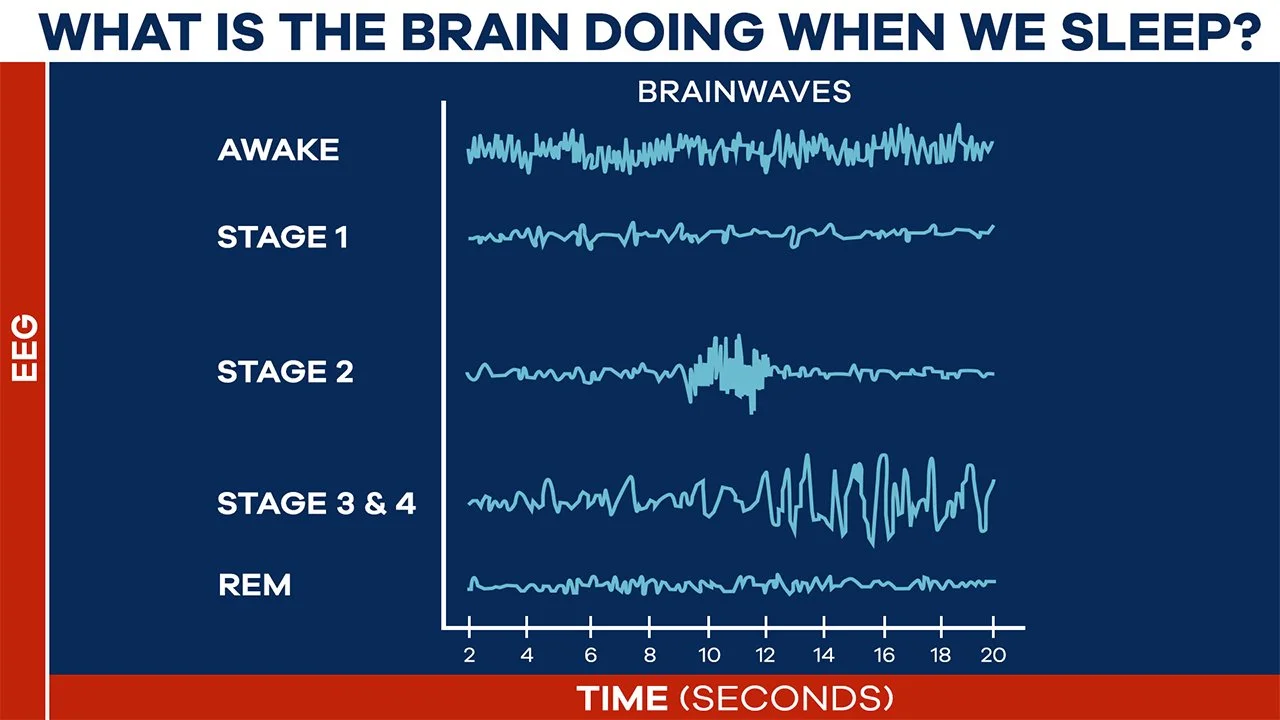
Originally from the following site.
After the deep sleep stages we hit REM sleep, which for the brain, looks a lot like being awake. During this period, your eyes move rapidly behind your eyelids, your breathing and heart rate starts to increase, and you start to dream. To ensure you’re not flailing your limbs in your dreams, your brain will paralyze your arms and legs.3
REM only takes about 10 to 20 minutes as an adult, before moving back to non-REM sleep. Typically through an 8 hour night’s sleep, you’ll experience 4-5 cycles of Non-REM to REM sleep, with only one or two periods of deep sleep stages during the night, and as we get older, we experience less REM sleep—which means less dreaming time.
Okay so, if you don’t have such great sleep cycles, one would assume it’s best to supplement these cycles during the day, right? It’s not quite that simple.
Sometimes when I have a day where my sleep was quite rough from the night before, all I want to do is sleep the day away. Unfortunately due to circadian rhythms (our internal body clock), I might be able to get 1, maybe 2 hours of sleep in, only to feel absolutely groggy and unable to sleep when bedtime rolls around.
Ideally, we’re not taking 2 hour long naps. Naps are best taken within the 15 to 30 minute range, so that we don’t enter into those deep sleep stages where the brain starts to produce delta waves. During these periods, the brain can start to restore levels of adenosine (see a previous blog where I go into depth about adenosine and caffeine here) which can help with wakefulness, as well as get some of those positive sleep related benefits such as memory consolidation. You might be able to get away with an hour long nap if you end up waking following the deep rest phase of sleep—but if you wake up part way through, chances are you’ll feel far more disoriented then rested.
When I was doing my masters program, I followed the Huberman Lab’s advice on napping. Back when he only had like 3 or 4 podcasts out, he was sharing science backed advice focus and on taking naps or NSDR (non-sleep deep rests) following a period of study to help the information consolidate in the mind5. Basically these rest periods were like sleep, but you weren’t asleep. Instead your mind and body were totally relaxed and in a deeply restful state. To practice getting NSDR, I do what’s called a Yoga Nidra, it only really last about 20 minutes, and I find myself quite recharged afterwards.
(Side note. Non-sleep deep rest, while being studied more commonly these days, has been around for a long time as Yoga Nidra under ancient yogic traditions).
The research out there that tries and measures the subjective and objective benefits of napping indicate that napping can be helpful for those that naturally tend to nap (huh, go figure). Those who do not nap normally, don’t report feeling less alert in the afternoons, but when tested against the napping group, performs worse in alertness.
Naps are undoubtedly a wonderful treat for the weary and tired out there. But for those perhaps not used to them, or don’t find them all that helpful, it could be due to factors such as excess caffeine supplementation, timing (too close to bed time), or napping for too long or too little. I would challenge those slamming back cups of coffee in favour of making it through the work day, consider how a mid-day nap might be just the thing you need.
Thanks for reading this week—until next time,
Isha
